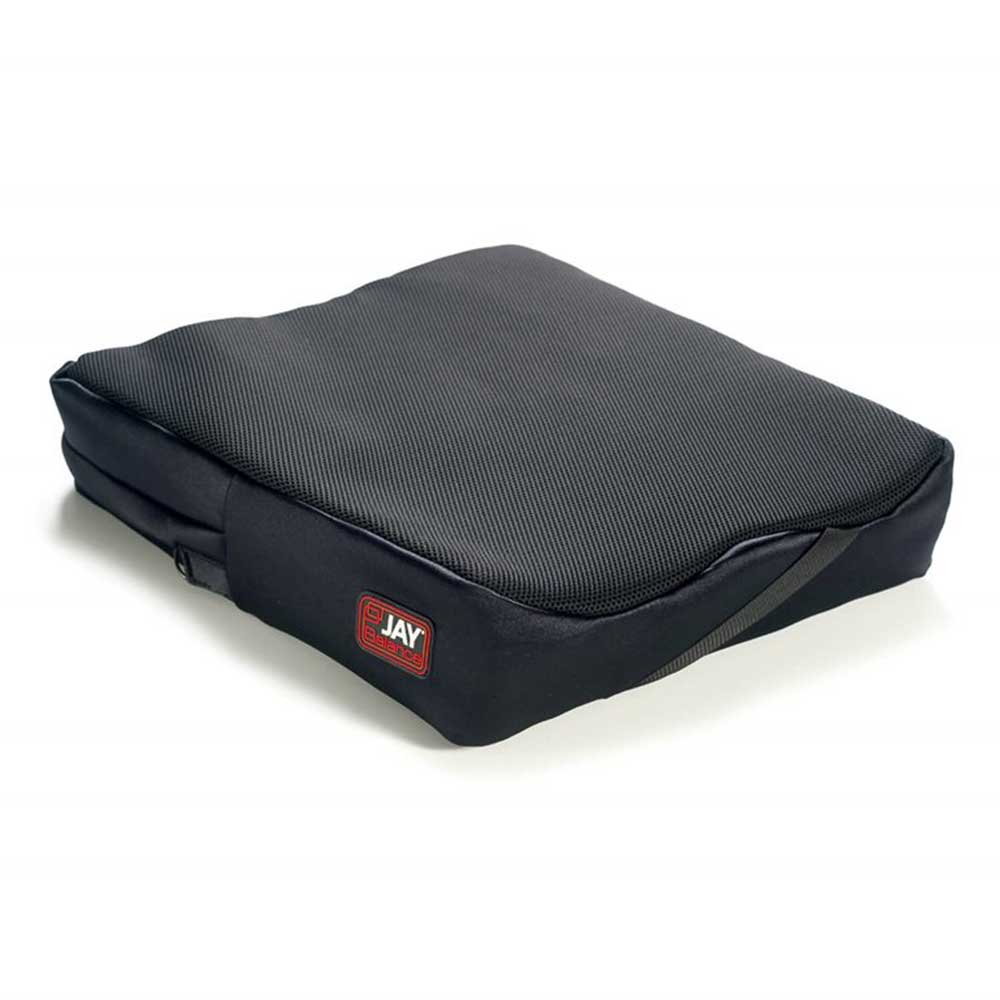
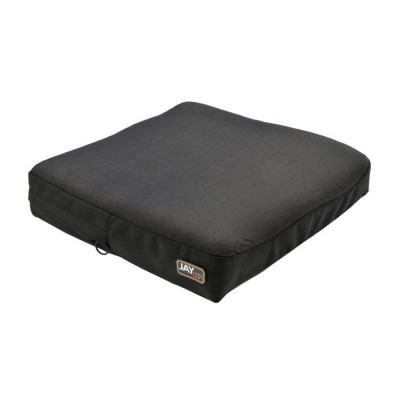
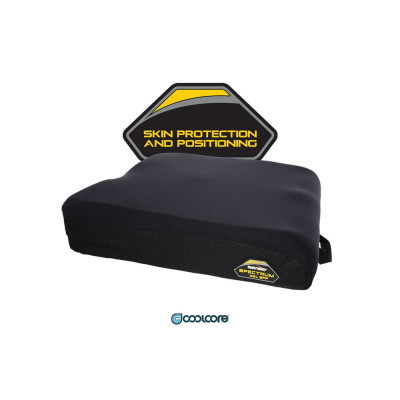
The JAY Balance is a configurable wheelchair cushion designed to combine high skin protection with a high level of pelvic and thigh positioning. Its contoured foam base can be configured with different inserts, covers and positioning components following an individual seating assessment.
Skin Protection with Postural Stability
The JAY Balance combines a supportive, multi-density foam base with a choice of pressure-distributing inserts. Its contoured shape helps stabilise the pelvis and thighs while providing immersion around vulnerable areas.
This is an assessment-led cushion rather than a single standard specification. Its size, contour depth, insert, cover and optional positioning components should be selected for the user’s clinical and functional requirements.
34–60cm
Available widths
34–60cm
Available depths
85mm or 100mm
Standard or Deep Contour
Up to 225kg
Size-dependent capacity
Pelvic Loading Area
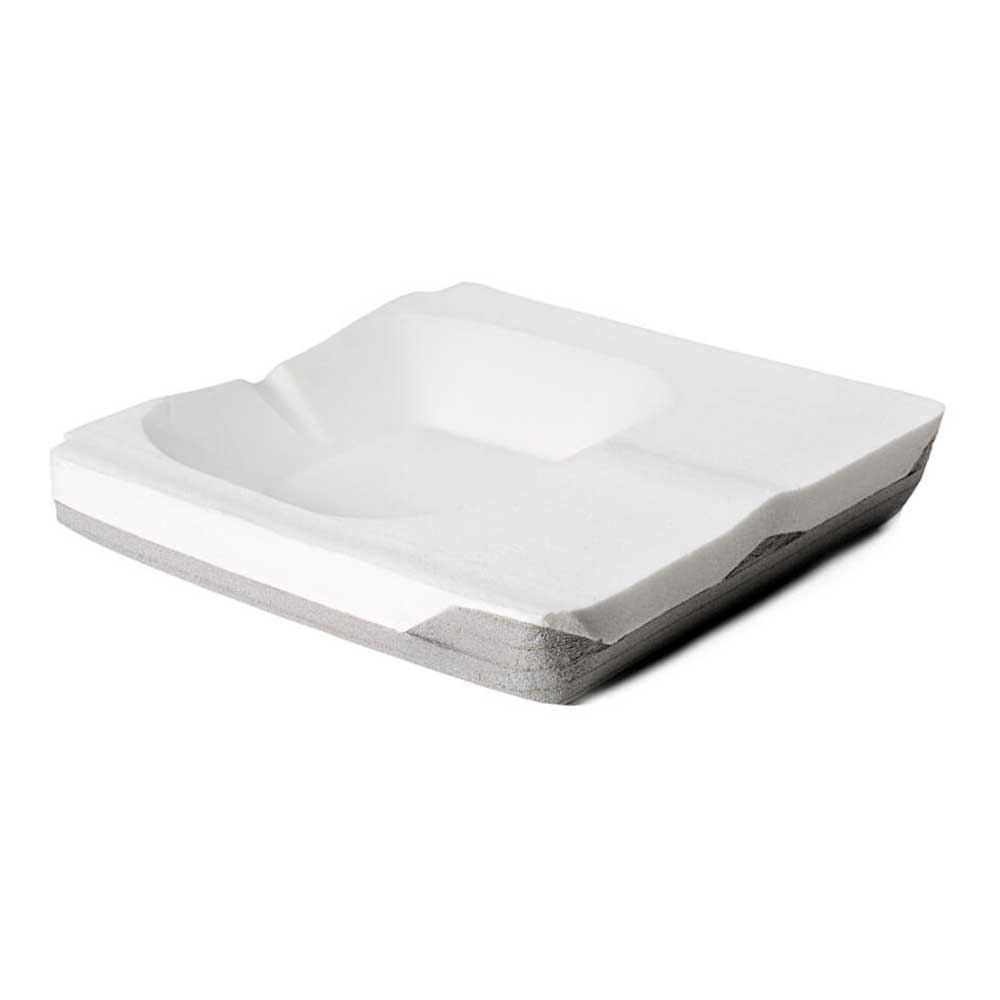
The cushion’s contoured well is known as the Pelvic Loading Area, or PLA. Its shape is based on anthropometric pelvic measurements and is designed to provide a stable foundation beneath the pelvis.
Shaped front and rear walls help retain the selected insert beneath the intended loading area. Optional pelvic obliquity pads can be used where clinically appropriate.
Multi-Density Contoured Foam
A firm, contoured closed-cell foam base provides stability and positioning. A softer open-cell upper layer improves comfort and immersion beneath the user.
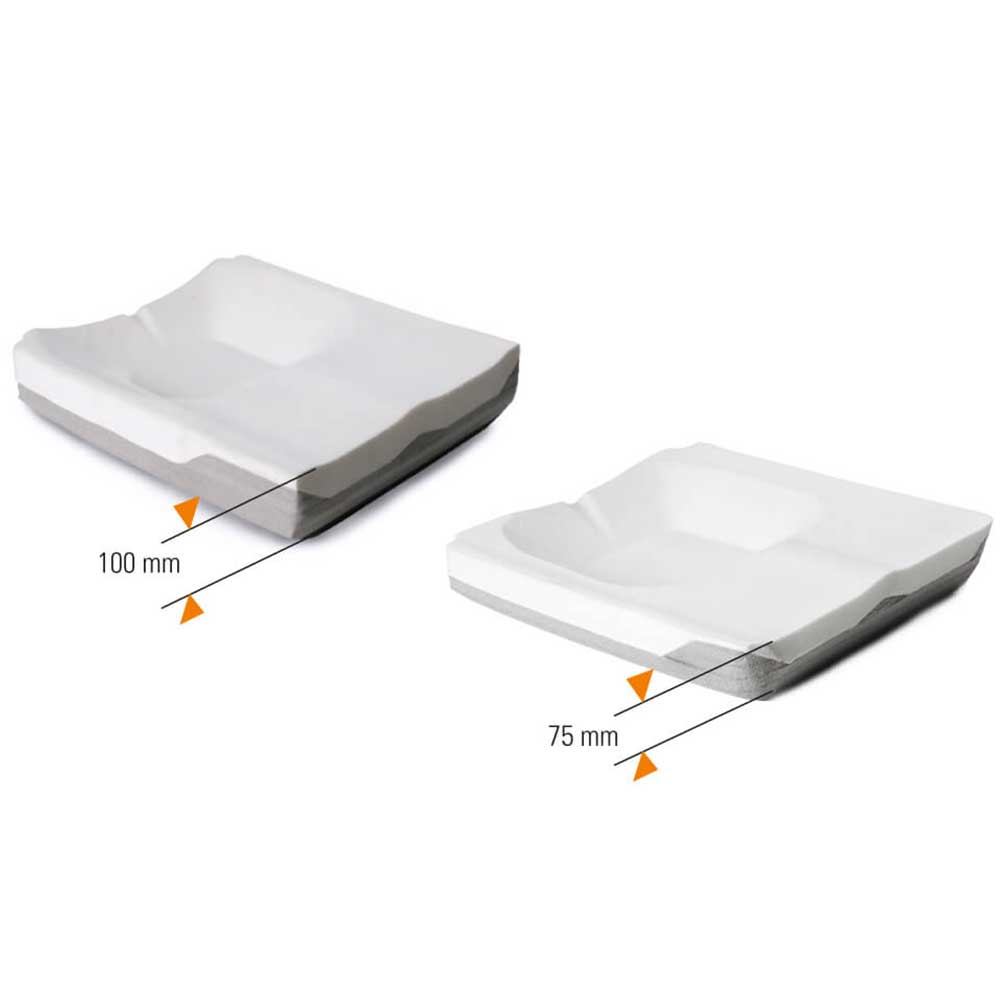
The cushion is available in a standard 85mm overall height or an optional 100mm Deep Contour configuration with a deeper pelvic well.
Configurable Insert Options
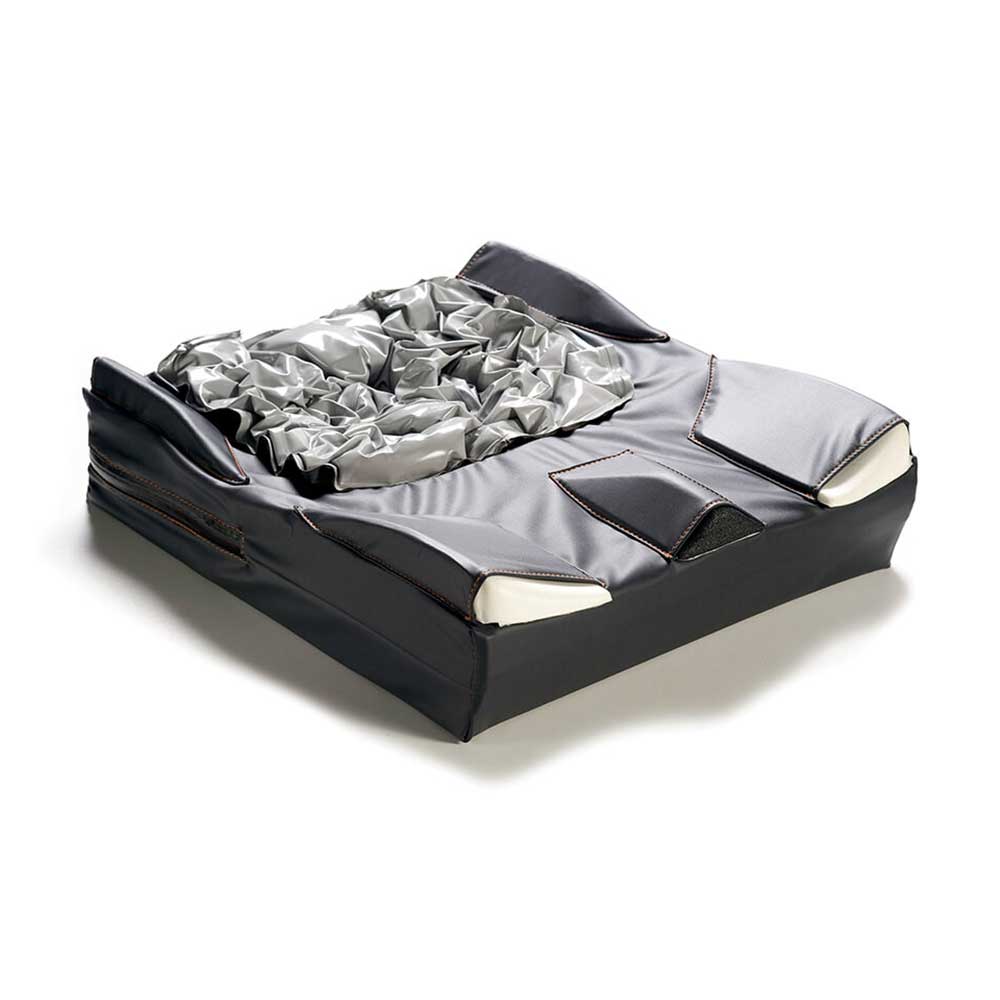
The JAY Balance can be configured with a JAY Flow Fluid insert or an adjustable air insert. The appropriate option depends on factors including skin-protection requirements, posture, stability, maintenance and the user’s ability to manage the cushion.
JAY Flow Fluid
A conforming fluid insert designed to support immersion and help reduce pressure and shear around the pelvis.
Adjustable Air
An air insert that can be adjusted during fitting to provide the required level of immersion and support.
Dual-Cover Protection
The foam base is protected by a two-way-stretch, water-resistant inner cover with an Aquaguard zip and anti-wicking thread. A choice of outer cover can then be specified according to the user’s requirements.
Microclimatic
Designed to support airflow and heat and moisture management.
Stretch
A flexible cover intended to conform around the cushion and user.
Incontinence
Provides additional protection where moisture management is required.
Optional Positioning Components
Field-adjustable positioning components can be used to support the pelvis and thighs. Available options may include lateral pelvic supports, medial or lateral thigh supports and pelvic obliquity pads.
These components should be selected and adjusted as part of the seating assessment rather than added without professional guidance.
Assessment required: No wheelchair cushion can eliminate all sitting pressure or guarantee the prevention of pressure injuries. Cushion selection must form part of a wider seating, skin-care and repositioning plan developed with an appropriately qualified professional.
Explore more wheelchair cushions and back supports or compare the lower-profile JAY Xtreme Active Cushion.
JAY Balance Configuration Options
The cushion is configured to suit the user rather than supplied in one universal specification. The final price depends on the selected size, insert, contour, cover and positioning options.
Standard or Deep Contour
Standard – 85mm Overall Height
The standard contoured base provides pelvic and thigh stability while maintaining a lower overall cushion profile.
Deep Contour – 100mm Overall Height
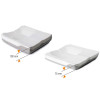
The optional Deep Contour base has a pelvic well approximately 15mm deeper, providing increased immersion and pelvic containment where clinically appropriate.
Insert Selection
| JAY Flow Fluid |
Conforms around the pelvis to support immersion and help reduce pressure and shear. The insert should be checked regularly for correct placement and condition. |
| Adjustable Air |
Provides adjustable immersion through an air-filled insert. Correct inflation must be established during fitting and maintained throughout use. |
| Cryo Fluid |
An active cooling option supplied as the separate JAY Balance Cryo Fluid Cushion. |
Cover Selection
| Microclimatic Cover |
Designed to encourage airflow and support heat and moisture management. |
| Stretch Cover |
A flexible outer cover that follows the cushion’s contours with limited surface tension. |
| Incontinence Cover |
Provides enhanced moisture protection where required. |
| Inner Cover |
Two-way-stretch Dartex fabric with a water-resistant construction, Aquaguard zip and anti-wicking thread. |
Technical Specifications
| Manufacturer |
Sunrise Medical |
| Brand |
JAY |
| Model |
JAY Balance |
| Product Type |
Configurable wheelchair positioning and skin-protection cushion |
| Available Widths |
340–600mm (34–60cm) |
| Available Depths |
340–600mm (34–60cm) |
| Standard Overall Height |
85mm (8.5cm) |
| Deep Contour Overall Height |
100mm (10cm) |
| Maximum User Weight |
150kg (23.6 stone) for 34–50cm widths |
| Maximum User Weight – Larger Sizes |
225kg (35.5 stone) for 56–60cm widths |
| Base Construction |
Contoured closed-cell moulded foam with a softer open-cell upper layer |
| Insert Options |
JAY Flow Fluid or adjustable air |
| Outer Cover Options |
Microclimatic, stretch or incontinence |
| Positioning Options |
Optional pelvic and thigh positioning components |
Configuration note: Not every size, insert, cover and positioning option can necessarily be combined. Modern Mobility will confirm the available configuration following assessment and enquiry.
Assessment and Fitting
Sunrise Medical recommends consulting a clinician or seating professional experienced in wheelchair seating and positioning. The JAY Balance should be selected, fitted and adjusted for the individual user and wheelchair.
What the Assessment Should Consider
• The user’s seated hip width, upper-leg length and overall body dimensions.
• Pelvic posture, flexibility, asymmetry and any tendency to slide or lean.
• Skin condition, pressure-injury history and ability to reposition independently.
• Whether Flow Fluid or an adjustable air insert is most appropriate.
• The required outer cover and moisture-management needs.
• Whether standard or Deep Contour shaping is required.
• The need for pelvic, medial-thigh or lateral-thigh positioning components.
• The wheelchair seat dimensions, upholstery, seat rails, back support and overall centre of gravity.
Basic Installation
1. Confirm that the cushion size and configuration match the assessment and the wheelchair seat.
2. Position the cushion centrally with the shaped leg troughs facing forwards and the rear of the cushion against the wheelchair back support.
3. Secure the cushion to the wheelchair using the fitted hook-and-loop attachments, where applicable.
4. Transfer the user onto the cushion and ensure the pelvis is positioned fully back within the Pelvic Loading Area.
5. Check pelvic position, thigh alignment, foot support and clearance from the wheelchair frame and other components.
6. Verify immersion and ensure the user is not bottoming out through the selected insert.
7. Recheck the complete seating position after the user has settled into the cushion.
Wheelchair stability: Adding or changing a cushion can alter the user’s seated height and the wheelchair’s centre of gravity. The complete wheelchair setup should be checked for stability after installation.
Insert and Positioning Adjustments
Air pressure, fluid distribution, obliquity pads and thigh or pelvic positioning components should be adjusted by the clinician or trained supplier. Incorrect adjustment may reduce immersion, stability or skin protection.
Do not cut the foam, modify the insert or add unapproved padding beneath or on top of the cushion. Any change to the user’s condition, posture, wheelchair or seating tolerance should trigger a review.
Follow-Up Reviews
The fit should be reviewed after initial use and at appropriate intervals thereafter. Reassessment may be needed following weight change, surgery, deterioration in posture, changes in skin condition or replacement of the wheelchair.
Stop using the cushion and contact the user’s healthcare or seating professional if persistent redness, skin damage, increased pain, reduced stability or a significant change in posture occurs.
Using and Caring for the JAY Balance
Follow the instructions supplied with the selected JAY Balance configuration. Fluid and air inserts have different inspection and adjustment requirements, so the correct guidance must be retained with the cushion.
Before Use
• Confirm that the cushion is facing the correct way, with the leg contours towards the front.
• Make sure the cushion is centred and securely positioned on the wheelchair seat.
• Check that both the inner and outer covers are correctly fitted and free from folds.
• Inspect the cover, zip, foam and selected insert for damage, contamination or unusual changes.
• Check the Flow Fluid distribution or air-insert inflation in accordance with the prescribed setup.
Skin monitoring remains essential: Check the user’s skin regularly in accordance with their clinical care plan. Persistent redness or any sign of tissue damage requires immediate professional advice.
Cleaning the Outer Cover
Remove the outer cover from the cushion before washing. Sunrise Medical states that the JAY Balance outer covers are machine washable at 60°C and quick to dry.
• Close the zip before washing and follow the care label attached to the selected cover.
• Allow the cover to dry completely before refitting it.
• Make sure the cover is fitted smoothly and in the correct orientation.
Inner Cover and Cushion Base
The water-resistant inner cover helps protect the foam base from moisture. Wipe it clean using a soft cloth and an appropriate mild cleaning solution, then allow it to dry fully.
Do not place the foam base in a washing machine or immerse it in water. If the inner cover becomes damaged or moisture reaches the foam, stop using the cushion and contact Modern Mobility for advice.
Flow Fluid Insert
• Inspect the insert regularly for punctures, splits or leakage.
• Confirm that it remains correctly positioned within the Pelvic Loading Area.
• Check that the fluid has not become displaced in a way that allows the user to bottom out.
• Never attempt to open, refill or repair the fluid insert yourself.
Air Insert
• Maintain the inflation level established during the seating assessment.
• Check the insert regularly for loss of air, valve damage or punctures.
• Do not assume that a very firm insert provides better protection; excessive or insufficient inflation can reduce immersion.
• Seek professional assistance if the correct inflation level cannot be maintained.
Storage and Inspection
Store the cushion in a clean, dry environment away from direct heat, flames and sharp objects. Do not leave heavy items resting on it during storage.
Replace damaged covers or inserts promptly. A change in the cushion’s shape, support, inflation or fluid distribution should be assessed before continued use.







Reviews
There are no reviews yet.