- Mobility Scooters
-
- Furniture
-
-
Riser Recliners
-
Fireside Chairs

-
Adjustable Beds
-
Care Beds

-
Mattresses
-
-
- Stairlifts
-


Showing all 7 results
Patient Hoists & Standing Transfer Hoists
Patient hoists provide powered lifting support for people who cannot complete certain transfers safely without assistance. This range includes mobile electric patient hoists, standing transfer hoists and related bedroom support equipment designed for use at home and in care environments. Because the correct setup depends on the user’s mobility, weight-bearing ability, sling requirements and available carer support, suitable assessment and instruction should form part of the selection process.




Patient Hoists for Safer Supported Transfers
A patient hoist is designed to help carers move a person between positions while reducing the need for manual lifting. Depending on the hoist and sling being used, this may include transfers between a bed, chair, wheelchair, commode or other suitable care equipment.
Patient hoists can be useful where standing, pivoting or transferring has become unsafe or physically demanding. However, they are specialist moving and handling products rather than general household lifting devices.
A patient hoist may be considered when:
- The user cannot complete a transfer safely without substantial assistance
- Manual lifting places excessive strain on carers
- The user has limited standing or weight-bearing ability
- Transfers take place regularly between a bed, chair or wheelchair
- A more controlled and supported lifting process is required
- The home has enough space for the hoist to be positioned and manoeuvred safely
What Is a Patient Hoist?
A patient hoist is a lifting system used with a compatible sling to support and move a person during a transfer. Mobile patient hoists normally have a wheeled base, lifting mast, boom and powered lifting mechanism.
The user is supported within the sling while the carer operates the hoist. The hoist lifts and repositions the person; it is not intended to transport them around the home over long distances.
Every hoist has its own maximum user weight, lifting range, spreader-bar configuration and compatible sling requirements. These specifications must be checked before use.
Patient Hoist, Standing Hoist or Transfer Aid?
The right product depends heavily on what the user can already do safely.
- Full-body patient hoists support users who cannot reliably stand or bear enough weight for a standing transfer
- Standing or stand-aid hoists support users who can normally bear some weight and participate in the transfer
- Transfer aids include products such as swivel cushions, transfer supports and smaller aids for users with greater independent mobility
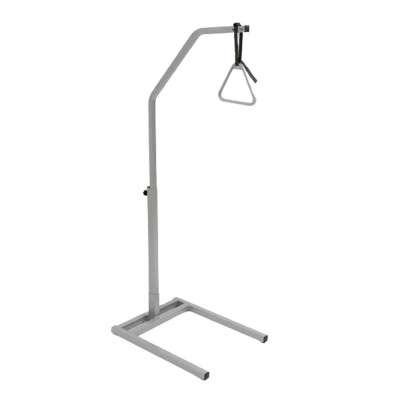
- Lifting poles provide a handhold for users who can actively reposition themselves in bed
A stand-aid hoist is not a substitute for a full-body patient hoist where the user cannot participate safely. Likewise, a lifting pole should not be used as a replacement for supported lifting.
Mobile Electric Patient Hoists
Mobile electric hoists use a powered actuator to raise and lower the user. Their wheeled base allows the hoist to be positioned around compatible beds, chairs and other care equipment.
When comparing electric patient hoists, check:
- Maximum user weight
- Overall hoist width and length
- Base-leg opening range
- Maximum and minimum lifting height
- Turning and manoeuvring space
- Battery charging requirements
- Emergency lowering controls
- Compatible spreader bars and slings
- Storage requirements when the hoist is not in use
The featured range includes mobile transfer hoists such as Samsoft and Hermes models, subject to current stock and suitability.
Standing and Stand-Aid Hoists
A standing hoist supports a user during a sit-to-stand or supported standing transfer. These products are generally designed for people who can participate in the movement and bear some weight through their legs.
A standing hoist may require the user to:
- Follow instructions during the transfer
- Maintain a suitable seated position
- Grip or use the available support where required
- Bear an appropriate amount of weight
- Maintain sufficient trunk and lower-body control
Whether a standing hoist is appropriate should be determined around the individual user rather than chosen simply because it appears smaller or easier to operate than a full patient hoist.
The Modern Mobility range can include stand-aid products such as the Novaltis 175 Stand Aid Hoist.
Choosing the Correct Sling
The sling is a fundamental part of a patient-hoist system. Hoist and sling compatibility, size, shape and support level must all be correct for the individual user and the transfer being completed.
Factors can include:
- User height and body shape
- Maximum sling weight capacity
- Head and trunk support needs
- Whether toileting access is required
- Amputation or asymmetrical support needs
- Sling attachment type
- Compatibility with the hoist spreader bar
- The transfer being undertaken
A sling should not be selected by price or stated size alone. Incorrect sling selection or attachment can create a serious safety risk.
Using a Patient Hoist at Home
Patient hoists can be used in private homes, but the room and care setup must be suitable.
Before choosing a hoist for home use, consider:
- Bedroom or living-room floor space
- Space beneath beds and chairs for the hoist legs
- Doorway widths
- Flooring and thresholds
- Whether furniture needs repositioning
- Where the hoist and sling will be stored
- Where the battery will be charged
- The number and capability of available carers
A hoist may fit within a room but still be difficult to turn, position or operate safely around the bed. Measurements should therefore cover the full transfer route rather than the storage space alone.
Patient Hoists for Bed Transfers
Many searches for “bed hoists” refer to mobile patient hoists used to support transfers into or out of bed.
The hoist must be able to position the user correctly while allowing adequate access around the bed. Bed height, under-bed clearance, mattress type and room layout can all affect suitability.
For users who can reposition independently but need a stable handhold, a free-standing lifting pole or patient helper may be more appropriate than a patient hoist.
Weight Capacity and Bariatric Requirements
Every patient hoist has a stated safe working load. The sling, spreader bar and any associated equipment must also be suitable for the user.
For higher user weights, do not assume that choosing a hoist with a sufficiently high headline capacity is enough. Overall width, lifting geometry, sling availability, bed access and room space must also be assessed.
The featured Hermes 250 Hoist, for example, offers a higher stated capacity than several standard models, but individual suitability still needs to be confirmed.
Carer Support and Training
Patient hoists should be used by people who understand the equipment, sling attachments, transfer process and emergency controls.
Before first use, carers should understand:
- How to inspect the hoist and sling
- How to position the hoist correctly
- How sling loops or clips attach
- How to raise and lower the user steadily
- How to operate brakes in accordance with the manufacturer’s instructions
- How emergency lowering works
- When the equipment should not be used
- How to report wear, damage or faults
Care plans, occupational therapy advice and the manufacturer’s instructions should be followed where relevant.
Inspection, Servicing and Everyday Checks
Hoists and slings should be kept in good condition and checked before use.
Everyday checks can include:
- Visible damage to the frame or lifting boom
- Worn wheels or castors
- Battery charge
- Correct operation of the handset
- Damage, stitching wear or contamination on the sling
- Secure attachment points
- Unusual movement, noises or fault warnings
Hoists should also receive the inspection, maintenance and servicing required for the specific setting and equipment. A damaged hoist or sling should not remain in use until it has been assessed appropriately.
What to Check Before Buying a Patient Hoist
Before ordering, confirm:
- Whether a full patient hoist or standing hoist is required
- The user’s mobility and weight-bearing ability
- Maximum user weight
- Required lifting height and range
- Compatible sling type and size
- Room measurements and under-bed clearance
- Carer availability and training
- Charging and storage arrangements
- Delivery, setup and demonstration requirements
- Ongoing servicing and inspection arrangements
Because patient hoists are safety-critical care products, it is sensible to obtain appropriate professional guidance where the user’s needs have not already been assessed.
Compare Patient Hoists at Modern Mobility
Modern Mobility stocks mobile patient hoists, electric transfer hoists, stand-aid hoists and related bedroom support equipment. Available products can include Samsoft, Hermes and Novaltis models, subject to current stock.
Contact Modern Mobility to discuss product specifications, weight capacity, room access, delivery and whether demonstration or further assessment may be required.
You may also find it useful to browse moving and handling equipment, transfer aids, lifting poles, care beds, bedroom aids and specialist seating.
Patient Hoist FAQs
What is a patient hoist?
A patient hoist is a lifting device used with a compatible sling to support transfers between suitable positions such as a bed, chair or wheelchair.
What is the difference between a patient hoist and a standing hoist?
A full patient hoist supports the user’s body within a sling. A standing hoist is generally intended for users who can bear some weight and participate in a supported standing transfer.
Can a patient hoist be used at home?
Yes. Mobile patient hoists can be used at home where the user, room layout, sling, carer support and moving and handling plan are suitable.
What is a bed hoist?
The term is often used to describe a patient hoist used for transfers into or out of bed. It can also be confused with lifting poles, which provide active repositioning support rather than powered lifting.
Do patient hoists include a sling?
Not necessarily. Sling availability and inclusion vary between products. The correct compatible sling must be selected for the user and intended transfer.
Can one sling be used with any patient hoist?
No. The sling must be compatible with the hoist, spreader bar, user and transfer type.
How much weight can a patient hoist lift?
Safe working loads differ between models. Always check the hoist, sling and associated equipment rather than relying on the hoist capacity alone.
Can one carer operate a patient hoist?
This depends on the equipment, user, risk assessment, care plan and manufacturer’s instructions. Do not assume one-person operation is suitable in every situation.
Do patient hoists need servicing?
Yes. Patient hoists require appropriate inspection, maintenance and servicing, with requirements depending on the equipment and setting.
Can Modern Mobility help me choose a patient hoist?
Yes. Modern Mobility can help explain available hoist specifications, although clinical and moving and handling assessments should be obtained where required.