- Mobility Scooters
-
- Furniture
-
-
Riser Recliners
-
Fireside Chairs
-
Adjustable Beds
-
Mattresses
-
-
- Stairlifts
-

Showing the single result
Lifting Poles
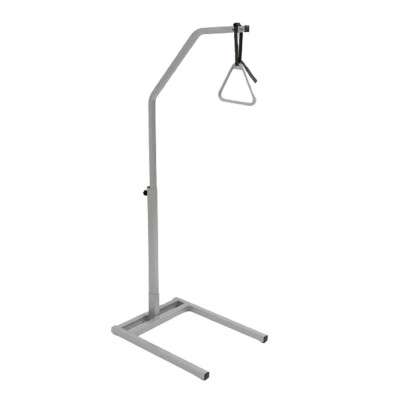
Lifting poles provide a secure handhold for people who need help repositioning themselves in bed or moving from lying to sitting. Often used alongside bedroom aids, these patient helpers support greater independence at home by making everyday bed movements easier without requiring powered lifting equipment.
Lifting Poles for Bed Mobility and Everyday Independence
A lifting pole provides a stable overhead support point that allows the user to pull themselves into a more comfortable position while in bed. They are commonly used by people with reduced strength or mobility who remain able to reposition themselves but need extra assistance.
Unlike a hoist, a lifting pole does not lift the user. Instead, it provides a secure handhold that helps the user move using their own strength.
Lifting poles may help with:
- Moving from lying to sitting
- Repositioning in bed
- Adjusting sleeping position
- Getting closer to the edge of the bed
- Reducing the effort needed for bed mobility
- Supporting greater day-to-day independence
Who Can Benefit From a Lifting Pole?
Lifting poles are commonly used by elderly people, wheelchair users, people recovering from illness or surgery, and anyone who finds changing position in bed difficult but still has enough upper-body strength to pull themselves safely.
They may also help reduce reliance on carers for simple repositioning tasks where appropriate.
If the user cannot safely support their own body weight or pull themselves independently, another solution such as a patient hoist or transfer aid may be more suitable.
Free Standing Patient Helpers
The current range includes free-standing patient helpers that position over or beside the bed to provide a convenient overhead handhold without requiring permanent fixing to walls or ceilings.
Because these products stand independently, they may be suitable where permanent installation is not practical or where the equipment may need moving between rooms.
What to Check Before Buying
Choosing the correct lifting pole depends on both the user and the bedroom environment.
Before ordering, consider:
- User strength and ability to pull independently
- Maximum user weight
- Bed height and position
- Available floor space
- Whether the pole is free-standing or fixed
- Clearance around the bed
- Whether carers also need access around the bed
A lifting pole should always remain stable during use and should never be relied upon beyond its intended weight capacity.
Lifting Pole or Patient Hoist?
Although they are sometimes confused, lifting poles and patient hoists serve very different purposes.
- Lifting poles help users reposition themselves using their own strength.
- Patient hoists lift or transfer users who cannot safely move independently.
- Transfer aids help users move between beds, chairs and other seating.
If the user requires full body support during transfers, a lifting pole is unlikely to be suitable on its own.
Bedroom Mobility Support
Lifting poles are often used alongside other bedroom mobility products such as bed transfer aids, adjustable beds, profiling beds and positioning supports.
Combining the right equipment can make everyday movement safer and reduce physical effort for both users and carers.
You may also find it useful to browse bedroom aids, transfer aids, patient hoists, care beds, profiling beds or moving and handling equipment.
Lifting Pole FAQs
Lifting poles help users reposition themselves in bed but are not designed to replace patient hoists.
What is a lifting pole?
A lifting pole is a support aid that provides an overhead handhold to help users reposition themselves in bed or move from lying to sitting.
Who uses a lifting pole?
Lifting poles are commonly used by elderly people, people recovering from surgery, wheelchair users and others who have sufficient upper-body strength but need additional support in bed.
Can a lifting pole help someone get out of bed?
It can help some users sit up or move towards the edge of the bed, provided they are able to support their own movement safely.
Is a lifting pole the same as a patient hoist?
No. A lifting pole provides a handhold for independent movement, while a patient hoist lifts users who cannot safely transfer themselves.
Do lifting poles need fixing to the wall?
Not always. Free-standing patient helpers are available that do not require permanent installation.
Can lifting poles be used at home?
Yes. Many lifting poles are designed specifically for home use as part of a bedroom mobility setup.
Can Modern Mobility help me choose a lifting pole?
Yes. Contact Modern Mobility for advice on lifting poles, patient helpers and other bedroom mobility products.