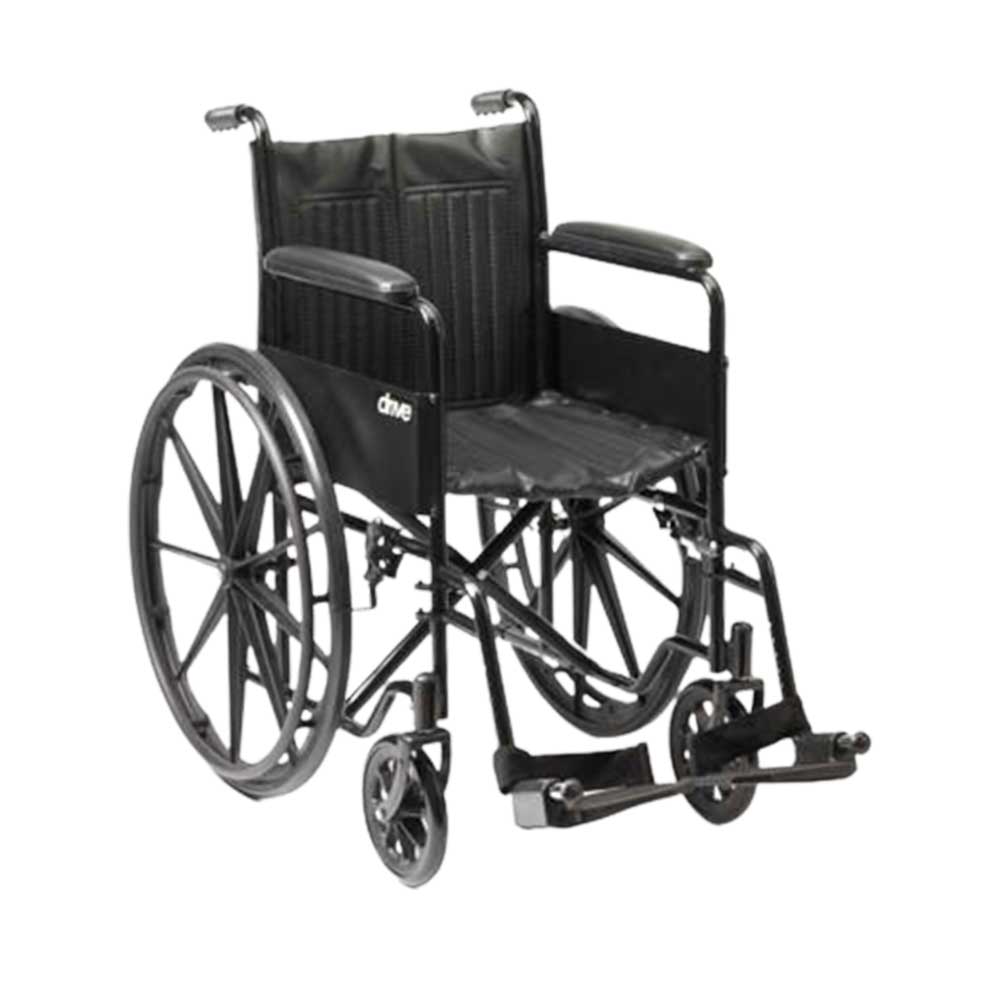
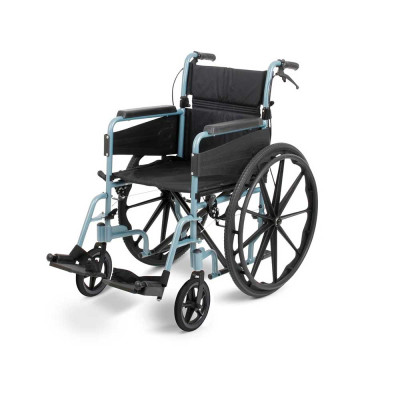
A robust self-propelled manual wheelchair for everyday indoor and outdoor mobility. The Drive S1 combines a folding steel frame with 24″ rear mag wheels and handrims, allowing the user to propel the chair while retaining push handles for attendant assistance.
Drive S1 Self Propelled Wheelchair
The Drive S1 is a practical self propelled wheelchair designed for users who are able to manually propel a wheelchair using the handrims on its large rear wheels. The self-propelled model uses 61cm (24″) composite mag rear wheels with plastic handrims, while rear push handles allow an attendant to provide assistance when required.
Its robust tubular steel frame is suitable for indoor and outdoor use on appropriate surfaces and folds to reduce the space required for storage or transportation. The S1 supports a maximum user weight of 115kg (18st).
24″
Self-propel rear wheels
18kg
Wheelchair weight
115kg (18st)
Maximum user weight
24″ Rear Wheels for Self Propulsion
The large 24″ rear mag wheels incorporate handrims that allow the wheelchair user to propel the S1 forwards and backwards manually. Reverse pressure can be applied to the handrims to slow the wheelchair.
Push handles at the rear also allow the chair to be propelled by an attendant when assistance is required, while rear stepper tubes can be used by an attendant when negotiating suitable kerbs.
Folding Steel Frame
The S1 uses a strong tubular steel frame that folds inwards when not in use. The footrests can also be swung away or removed, helping make the wheelchair more convenient to store or transport.
Adjustable, Removable Footrests
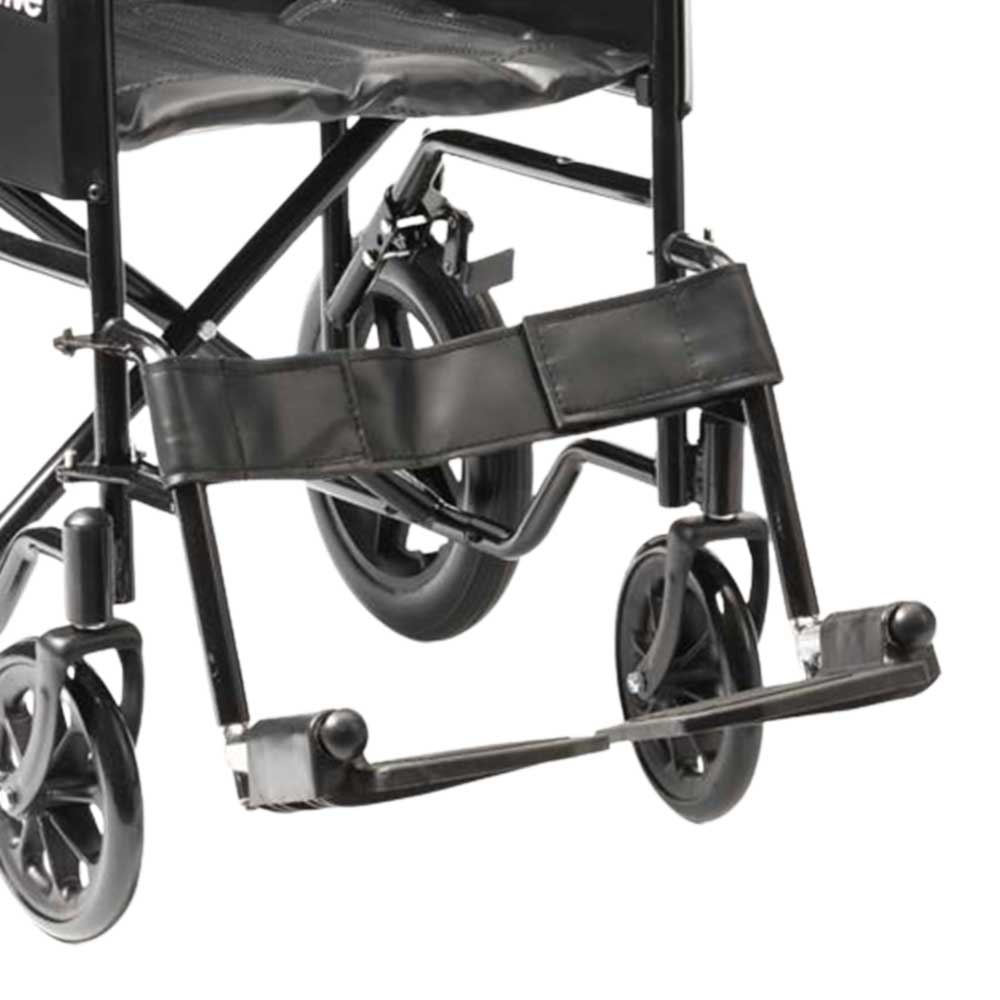
The plastic footrests are height adjustable to support different leg positions. They can be swung away to provide more space during transfers or removed when preparing the wheelchair for storage and transportation. A heel strap is supplied as standard on the self-propelled model.
Practical Everyday Seating
Vinyl upholstery provides an easily cleaned seating surface, with padded armrests for additional support. Solid puncture-proof polyurethane tyres require limited upkeep compared with pneumatic tyres.
Crash-Test Compliant for Vehicle Transport
The Drive S1 Self Propel has been tested to the requirements of ISO 7176-19 and can be used as a forward-facing seat in a motor vehicle when the manufacturer’s transport requirements are followed.
Vehicle transport: Drive recommends transferring to a vehicle seat and using the vehicle’s occupant restraint system whenever possible. Where the S1 is used as a vehicle seat, it must be correctly secured using the designated WTORS points with an appropriate 4-point wheelchair tie-down and 3-point occupant restraint system.
Powerpack Compatibility
The S1 is compatible with selected retrofit wheelchair powerpacks. Compatibility and mounting requirements depend on the powerpack and user configuration, so fitting should be confirmed before use. Browse our wheelchair power packs for more options.
Drive S1 Self Propelled Wheelchair Features
The S1 combines straightforward self-propelled mobility with a robust folding construction and practical features for everyday use.
24″ Self-Propel Rear Wheels
Large composite mag rear wheels incorporate plastic handrims so the wheelchair user can propel the chair manually.
Folding Steel Frame
The robust tubular steel frame folds to reduce the space required when the wheelchair is stored or transported.
Swing-Away Removable Footrests
The footrests can be swung away to assist with transfers or removed when preparing the wheelchair for storage.
Height-Adjustable Footplates
Push-button adjustment allows the footplate height to be altered for a more appropriate leg position.
Parking Brakes
Rear-wheel parking brakes are accessible to the wheelchair user or attendant and should be applied whenever the chair is stationary.
Solid PU Tyres
Puncture-proof polyurethane tyres provide a lower-maintenance alternative to pneumatic wheelchair tyres.
Rear Stepper Tubes
Stepper tubes allow an attendant to raise the front castors when negotiating suitable kerbs.
Vinyl Upholstery & Padded Armrests
The S1 combines wipe-clean vinyl upholstery with padded armrests for practical everyday seating.
Heel Strap Included
The self-propelled S1 is supplied with a heel strap as standard for additional foot support.
Selected Powerpack Compatibility
The S1 can accept selected retrofit powerpacks where compatibility, mounting position and user configuration are appropriate.
Also available as the Drive S1 Transit Wheelchair. Explore more wheelchairs or view more products from Drive DeVilbiss.
Drive S1 Self Propelled Wheelchair Specifications
Current technical specifications for the Drive S1 Self Propel model CS1142SPMAG.
| Model |
CS1142SPMAG |
| Overall Height |
90cm (35.4") |
| Overall Width |
61cm (24") |
| Folded Width |
26cm (10.2") |
| Overall Length with Footrests |
106cm (41.7") |
| Seat Height |
50cm (19.7") |
| Seat Width |
45cm (17.7") |
| Seat Depth |
40cm (15.7") |
| Rear Wheel Diameter |
61cm (24") |
| Product Weight |
18kg (40lb) |
| Maximum User Weight |
115kg (18st) |
| Maximum Gradient |
10° |
Using and Caring for the Drive S1 Self Propelled Wheelchair
Correct setup, brake use and regular checks are important when using the Drive S1. The following guidance is based on Drive DeVilbiss Healthcare's instructions for the CS1142SPMAG self-propelled model.
Self Propelling the S1
The S1 Self Propel can be moved forwards and backwards by the wheelchair user using the handrims fitted to the large rear wheels. Reverse pressure can be applied to the handrims to slow the wheelchair.
An attendant can also propel the wheelchair from behind using the push handles when assistance is required.
Using the Parking Brakes
Push the handle on each parking brake until it locks into position. To release the brake, move the handle in the opposite direction. Drive states that the parking brakes should always be applied when the wheelchair is stationary.
Fitting and Adjusting the Footrests
1. Place each footrest onto the two receiver posts on the wheelchair frame.
2. Swing the footrest inwards until it locks into position.
3. To adjust the height, press the brass push buttons and move the footplate to the required position.
4. Release the buttons and continue adjusting until the footplate locks into position with an audible click.
5. To remove a footrest, press the chrome release lever while swinging the footrest outwards.
Important: Do not stand on the footrests. Drive warns that overloading them can damage the wheelchair and cause harm.
Transfers
When transferring into or out of the S1, move the wheelchair and transfer surface as close together as practical. Apply the parking brakes and fold or swing the footrests out of the way before transferring.
Where a user needs to be lifted during a transfer, attendants should be suitably trained and competent to carry this out safely.
Gradients, Kerbs and Outdoor Use
The S1 is suitable for indoor and outdoor use but is not intended for rough or uneven terrain. Drive specifies a maximum gradient of 10° and advises avoiding sudden changes of direction when travelling on a slope.
When an attendant needs to negotiate a suitable kerb, the rear stepper tube can be used to raise the front castors. Drive advises approaching a kerb head-on and lowering the wheelchair carefully.
Safety: Do not reverse down a gradient, do not use the wheelchair on escalators and keep feet on the footrests while the wheelchair is moving.
Folding the Wheelchair
1. Fold the footrests up and swing them outwards, or remove them completely.
2. Grasp the centre of the front and rear edges of the seat sling.
3. Pull upwards on the seat canvas and the wheelchair will fold inwards.
Before Each Use
• Check the brakes for correct operation.
• Check the tyres for wear or damage.
• Do not use the wheelchair if it is damaged, badly worn or shows a change in performance.
Cleaning
Drive recommends keeping the wheelchair dust free and cleaning it at least once a week. Upholstery and tyres can be cleaned using a damp cloth and mild soap solution.
Allow the wheelchair to dry fully before using it again.
Cleaning care: Avoid neat bleach and abrasive surface cleaners. Drive also recommends polishing metal parts approximately once a month with an auto wax.
Regular Maintenance
Brakes and tyres should be checked before each use and at least once a month. Worn or torn upholstery should be replaced promptly.
• Check tyres and castors.
• Check wheel bearings and brakes.
• Check the footrest locking mechanism.
• Inspect seat and back upholstery.
• Check arm pads, back posts and the folding mechanism.
• Arrange repair or replacement of worn or damaged parts as required.
Storage
Store the S1 in a dry environment away from direct sunlight. If the wheels remain fitted during storage, leave the parking brakes applied.
Drive notes that the wheelchair may be folded and stored in a motor vehicle, although its 18kg weight may make lifting difficult for some users.
Servicing
Drive DeVilbiss Healthcare recommends annual maintenance by an approved service engineer so that worn or damaged components can be repaired, replaced, adjusted or lubricated where required.







Reviews
There are no reviews yet.