Aidapt Adjustable Linked Chair Raiser Kit
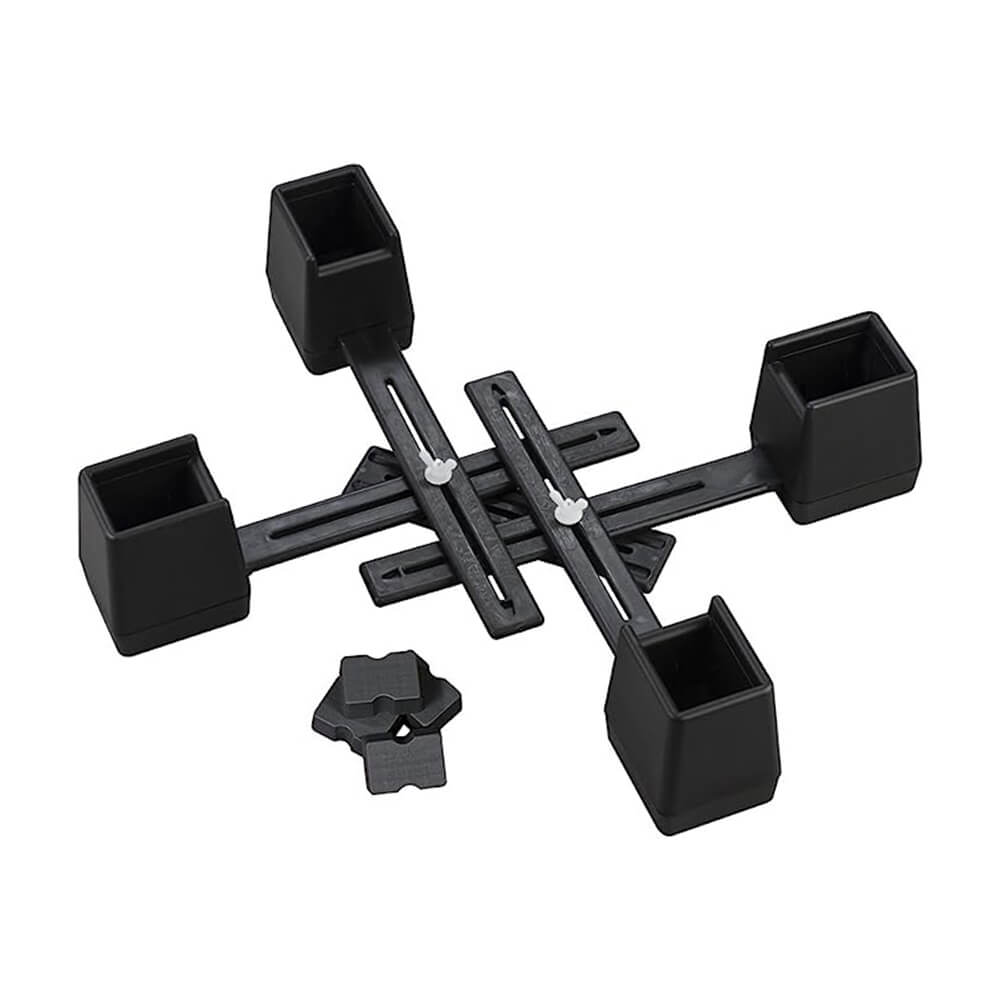
The Aidapt Adjustable Linked Chair Raiser Kit is designed to increase the seat height of a compatible chair with legs. Raising the chair reduces the vertical distance involved when sitting down and standing up, which may make these movements easier for some users.
Supplied insert blocks provide three height settings: 50mm (2″), 75mm (3″) or 100mm (4″). The supports are connected as a linked system to help keep the chair legs correctly positioned.
Three Raise Heights
Choose a 50mm, 75mm or 100mm increase using the supplied height-adjusting insert blocks.
Linked Design
The linked configuration helps keep the individual chair-leg supports positioned together as one system.
For Chairs with Legs
Designed specifically for compatible chairs supported by individual legs rather than pedestal, sled or solid-base furniture.
High Load Capacity
The maximum combined load is 500kg, including the weight of the chair and its occupant.
Choosing the Correct Height
The appropriate raise height depends on the user’s lower-leg length, current chair height, transfer ability and sitting posture. Raising a chair too far may prevent the feet from resting securely on the floor or make the chair uncomfortable to use.
Measure the existing seat height and consider the finished height after adding 50mm, 75mm or 100mm. Where the user has complex mobility, balance or postural requirements, seek advice from an occupational therapist or another appropriate professional.
Compatibility is essential: The kit is intended for chairs with suitable legs. Do not assume that it will fit furniture with castors, runners, pedestal bases, recliner mechanisms or damaged legs.
Explore more everyday equipment in Modern Mobility’s Living Aids range.
Compatibility and Specifications
This is the Aidapt VG824M linked chair raiser. Check the intended chair, required height and total load before fitting the product.
| Manufacturer |
Aidapt |
| Product code |
VG824M |
| Product type |
Adjustable linked chair raiser kit |
| Intended furniture |
Compatible chairs with legs |
| Raise-height options |
50mm, 75mm or 100mm |
| Imperial equivalents |
2", 3" or 4" |
| Adjustment method |
Supplied insert blocks |
| Maximum combined load |
500kg (78 stone), including the chair and occupant |
| Product dimensions |
145 × 410 × 320mm |
| Net weight |
1.96kg |
| Colour |
Black |
| EAN |
5021196645573 |
Load-limit clarification: The 500kg figure is not the occupant’s maximum weight on its own. It is the maximum combined load of the chair and its occupant.
Check the Chair Before Ordering
• Confirm that the chair is supported by individual legs.
• Check that every leg and the surrounding chair frame are secure and undamaged.
• Compare the chair’s leg arrangement with the available space inside the linked raiser.
• Make sure the floor beneath the chair is firm, level and dry.
• Calculate the finished seat height at each of the three available settings.
• Include both the chair and occupant when checking the 500kg load limit.
This Is Not the Langham Multi Purpose Raiser
The Aidapt VG824M is a complete linked kit designed for compatible chairs with legs. It should not be confused with the separate Langham modular system previously mentioned in the page’s metadata.
For furniture requiring a configurable raising system, view the Langham Multi Purpose Chair Raiser and obtain advice about the components required.
Fitting the Linked Chair Raiser
Read and follow the instructions supplied with the Aidapt VG824M. The chair should remain unoccupied throughout fitting, adjustment and initial stability testing.
Safe furniture handling: Do not attempt to lift or reposition a heavy chair alone. Obtain sufficient assistance for the chair’s size and weight.
Before Fitting
• Inspect the chair frame and every leg for looseness, cracks or damage.
• Move the chair to a firm, level and dry floor.
• Select the 50mm, 75mm or 100mm raise height before placing the chair onto the system.
• Use the same height configuration at every chair-leg support.
Positioning the Chair
1. Configure the supplied insert blocks at the required height, following the manufacturer’s instructions.
2. Position the linked raiser beneath the chair so that each leg aligns with its corresponding support.
3. Carefully lower the chair until every leg is fully and centrally supported.
4. Check that the linked structure sits flat and that no chair leg is resting against an edge or only partially supported.
5. Apply firm pressure to different parts of the unoccupied chair to check for rocking, movement or instability.
6. Only allow the user to sit once the chair has been checked and found stable.
After Fitting
• Check that the user can sit with an appropriate posture and supported feet.
• Make sure the user can reach the armrests and sit fully back in the chair.
• Recheck the position of every chair leg after the first few uses.
• Stop using the raiser immediately if the chair rocks, shifts or develops any instability.
Ongoing Checks and Cleaning
Regularly check the linked sections, insert blocks and chair-leg supports for movement, distortion, cracking or wear. Confirm that the chair remains level and that all legs remain correctly positioned.
Clean the raiser with a soft damp cloth and mild detergent, then dry it fully. Do not use abrasive cleaners or improvised replacement blocks.
Never create an uneven raise: Do not use different insert heights beneath different chair legs unless expressly instructed as part of an appropriate professional assessment.







Reviews
There are no reviews yet.